Practical guides · Multi-location
Liberty Weblab
Franchise marketing guide: grow local without breaking the brand
A practical system for franchise and multi-location growth—shared brand standards, local SEO and ads that actually convert, and reporting that keeps corporate and owners aligned.
Franchise marketing fails when local and brand fight each other
Corporate wants consistency. Owners want leads this month. Agencies often deliver either rigid national templates that ignore local intent—or local freelancing that dilutes the brand. This guide outlines a middle path: clear governance, channel playbooks, and measurement that both sides can trust.
It pairs well with local SEO, paid media, and location-aware web experiences—not one-off “posts for every store.”
-
Brand guardrails What must stay national vs what locations can customize.
-
Local demand Maps, location pages, and paid coverage that match service areas.
-
Shared scorecards Leads and revenue by location—not vanity vanity totals.
Operating pillars
Five pillars of franchise digital marketing
Build these once, then scale location by location—without rewriting strategy every quarter.
-
Governance
Roles, approvals, and brand rules for corporate and franchisees.
-
Local SEO
GBP, citations, location pages, and reviews that stay accurate.
-
Paid media
National vs local budgets, geo rules, and shared creative kits.
-
Web & landing
Templates that localize without spawning unmanageable site sprawl.
-
Reporting
Location scorecards owners and HQ can both act on.
Deep dive
How each pillar works in practice
Governance before campaigns
Document who owns brand assets, who can launch local ads, what claims need legal review, and how disputes get resolved. Without that, every promotion becomes a negotiation.
A simple RACI (corporate strategy, regional marketing, location ops, agency) prevents “everyone posted something different” chaos on social and paid.
Done: Written rules franchisees can follow without waiting weeks for approval on routine local offers.
Local SEO that scales cleanly
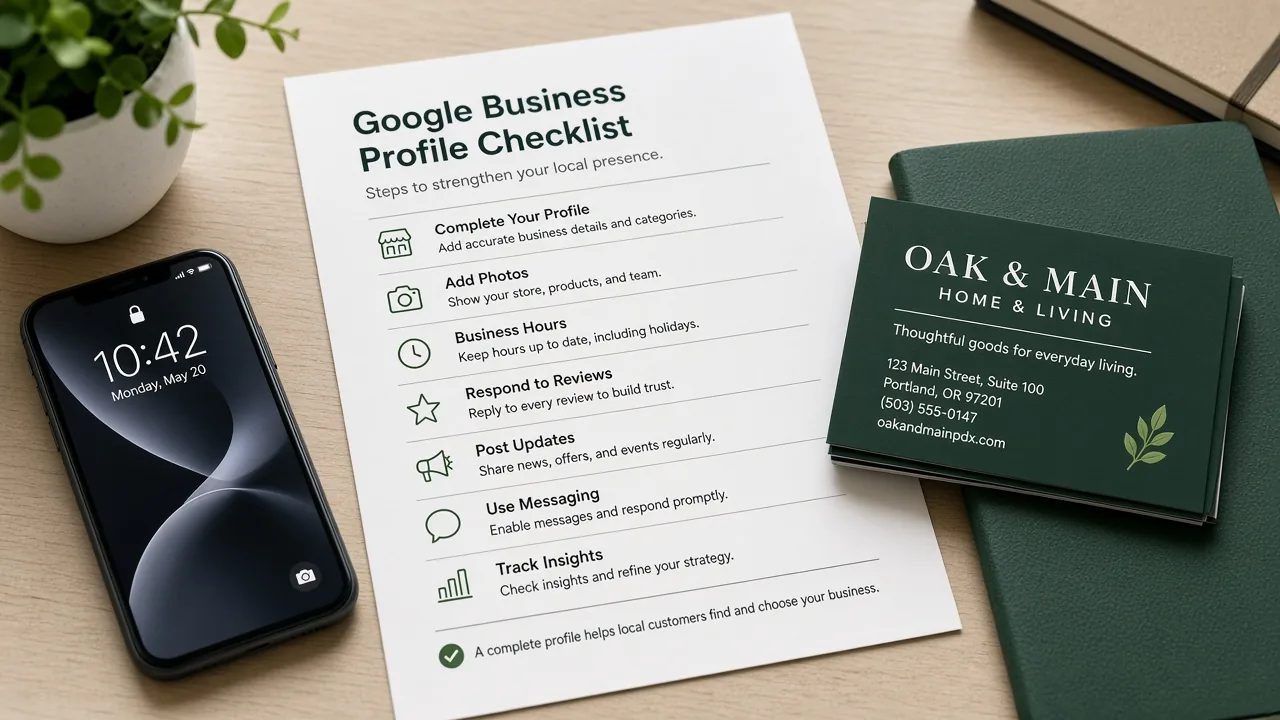
Standardize Google Business Profile categories, hours, services, and photo guidelines. Keep NAP consistency across citations. Build location pages with unique proof—not thin city spun copy.
Reviews need a response playbook and escalation path. Local SEO programs should report by location cluster, not one national average that hides underperformers.
Done: Accurate profiles and location pages owners trust—and Search Console/Maps visibility you can audit.
Paid media with clear geo rules
Separate brand defense and national demand from location conquest. Define who pays for overlapping ZIPs. Share approved creative kits so local ads stay on-brand while testing offers.
Refuse to scale location spend onto weak landing pages. Shared negative keywords and lead definitions stop franchisees from buying junk inquiries.
Done: Budget rules + creative kits + landing standards before media increases.
Web templates, not site sprawl
Use modular location templates: shared design system, local hours, team, offers, and schema. Avoid dozens of one-off microsites that go stale. Pair with conversion paths that match local intent.
When redesigning, protect SEO equity with redirects and content parity—see our redesign checklist.
Done: One flexible web system locations can update without breaking brand or SEO.
Reporting both HQ and owners will use
Scorecards should show leads/revenue (or booked jobs) by location, channel mix, cost per qualified lead, and top issues (GBP health, landing speed, ad waste). Corporate sees network health; owners see their store’s next action.
Vanity rollups hide the locations that need coaching. Franchise marketing succeeds when underperformers get a sequenced fix—not when averages look fine.
Done: Monthly location scorecards with owners, issues, and next actions—not a single network vanity PDF.
Rollout
How to roll out without boiling the ocean
Pilot with a representative set of locations, prove the playbook, then expand. Nationwide launches without governance usually create cleanup work.
-
Phase 1
Pilot 5–15 locations
Lock governance, GBP standards, landing templates, and one paid + SEO scorecard.
-
Phase 2
Expand by region
Train owners, clone templates, and add locations that meet readiness criteria.
-
Phase 3
Optimize the network
Coach underperformers, retire weak offers, and reallocate budget to proven geos.
Checklist
Franchise marketing readiness checklist
If these are missing, fix foundations before buying more “local ads for every store.”
- Written brand and offer approval rules
- GBP and NAP standards with ownership
- Location page template with unique local proof
- Geo and budget rules for paid media
- Shared lead definition across locations
- Scorecard that shows winners and strugglers
From playbook to rollout
Want a franchise marketing plan that scales cleanly?
Request a free proposal—we will map governance, local SEO, paid, and web templates to your network size and goals.