Insights · Buyer’s guide
Liberty Weblab
SEO buyers’ guide: how to hire an SEO partner without wasting months
A practical checklist for scoping audits vs retainers, reading proposals, spotting red flags, and choosing an SEO partner who can map work to pipeline—not vanity rankings.
Buying SEO is buying a plan—not a package name
SEO proposals often look alike until you compare what is diagnosed, who executes, how success is measured, and what happens when priorities change. This buyers’ guide helps you evaluate SEO services the way operators do: by constraint, capacity, and commercial outcome.
Use it before you shortlist agencies, during RFP scoring, or when you renegotiate a retainer that feels busy but not accountable.
-
Scope clarity Audit, remediation, content, and authority are different buys.
-
Proposal quality Look for assumptions, owners, and kill criteria—not buzzwords.
-
Risk control Red flags and guarantees that create cleanup debt later.
Buyer journey
Five steps to hire SEO with clearer expectations
Work these in order. Skipping diagnosis or measurement is how teams buy activity that never compounds.
-
Define the win
Leads, revenue, demos, or store visits—plus timeline and markets.
-
Choose engagement shape
Audit, project sprint, retainer—or a sequenced mix.
-
Score the proposal
Assumptions, deliverables, owners, reporting, dependencies.
-
Filter red flags
Guarantees, opaque links, no access, one-size packages.
-
Onboard for accountability
Access, baselines, decision rights, and a 90-day plan.
Deep dive
What to demand at each step
Define the commercial win before keywords
Write a one-page brief: primary outcome, sales cycle length, must-win markets, known technical debt, content capacity in-house, and who approves publishing. Agencies cannot price honestly without those constraints.
If your brief only says “rank higher,” you will get keyword theater. Tie SEO to qualified demand your sales team recognizes.
Done: A brief you can paste into every RFP so proposals share the same assumptions.
Pick the engagement shape that matches capacity
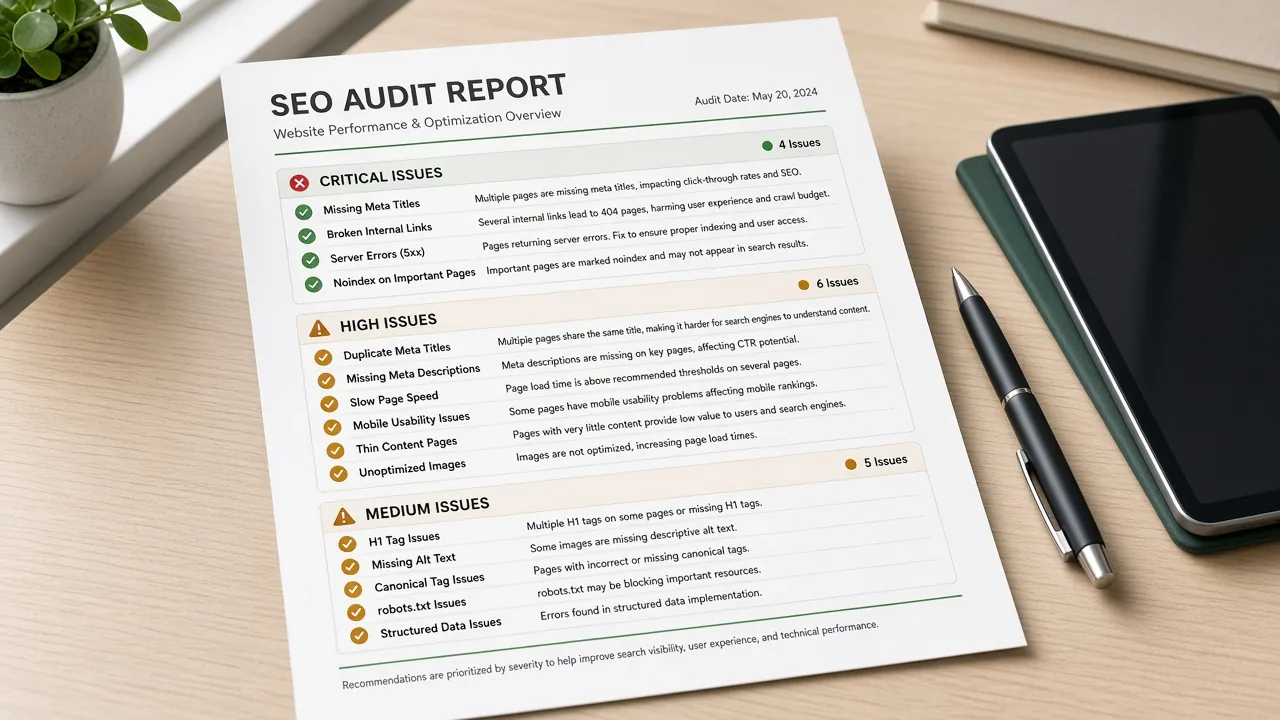
An SEO audit buys diagnosis and a prioritized roadmap. A retainer buys ongoing execution. Technical remediation and content production are often the expensive middle—do not hide them inside a vague “SEO package.”
Many teams sequence audit → 60-day foundation → retainer. That usually produces cleaner budgets than buying a year of activity with no shared diagnosis. See also how SEO pricing actually moves.
Done: You know whether you are buying clarity, fixes, content velocity, or all three.
Score proposals like an operator
Score each proposal on: stated assumptions; technical and on-page scope; content ownership; link/outreach quality criteria; reporting cadence; named roles; and dependencies on your developers. Prefer partners who connect work to technical SEO, on-page templates, and commercial pages—not only “content calendar” language.
Ask how SEO shares learnings with paid and CRO. Siloed SEO is slower to compound.
Done: A scorecard you can defend to leadership—not a gut feel from a sales deck.
Filter red flags early
Walk away from #1 ranking guarantees, opaque “proprietary link packages,” no Search Console access, identical deliverables for every industry, and no technical review before content production. Cheap SEO becomes expensive when cleanup debt arrives.
Also watch for proposals that never mention conversion paths. Rankings without capture waste the budget.
Done: A short “disqualify” list your team agrees on before demos.
Onboard for accountability—not slideware
Day-one access should include analytics, Search Console, CMS, and tag manager where relevant. Agree on baseline metrics, a 90-day sequence, decision rights for publishing, and how priorities change when data moves.
Ask for a constraint map and kill criteria for work that is not earning its keep. That is how SEO stays a growth program instead of a permanent activity invoice.
Done: Shared baseline, owners, and a first-quarter plan your leadership can review.
RFP questions
Questions that separate real SEO partners from checklists
Use these in demos. Vague answers usually mean vague delivery. Strong partners answer with process, owners, and examples of what they refuse to do.
-
Diagnosis
What does your first 30 days produce?
Look for a constraint map and sequenced roadmap—not only keyword lists.
-
Execution
Who writes, who ships, who codes?
Clarify content, technical, and approval ownership so velocity is real.
-
Measurement
How do you redefine success beyond rankings?
Expect qualified demand, assisted conversions, and clear reporting cadence.
Quick checklist
Before you sign an SEO retainer
If any of these are missing, pause—or renegotiate scope.
- Shared commercial goal and markets in writing
- Audit vs retainer vs content costs separated clearly
- Access to Search Console, analytics, and CMS agreed
- Technical review planned before mass content production
- Reporting tied to demand quality—not vanity alone
- No ranking guarantees or opaque link schemes
Ready to scope SEO properly
Want a proposal you can compare on substance?
Share your goals and constraints—we will recommend audit, foundation, or retainer scope that matches your timeline.